the solution

Remodeler Website Design: Winning the Audition Before the Consultation

Why a homeowner decides whether to trust you in the first few seconds on your site, and how a conversion-first build turns that visit into a booked $200K+ project.

Kayla Garcia

Brand Specialist
Last Updated:
June 29, 2026
11 minute read

Key Takeaways:

  • A homeowner forms a trust judgment about your brand within seconds of your site loading, long before they read a word of your copy, which is why design decisions are conversion decisions. It’s not decoration.
  • Word-of-mouth doesn't skip the website; it actually sends traffic to it. A referred homeowner almost always Googles you before calling, so a weak site quietly undoes the introduction your best client just made for you.
  • The most expensive thing on most remodeler websites is invisible: stock photos, a portfolio that stops in 2021, and slow load speeds that send more than half of mobile visitors away before they ever see your work.
  • The goal of your call-to-action isn't more leads, it's the right ones. A flood of unqualified inquiries just buries the good projects, so keep the contact step low-friction to make sure qualified, right-fit homeowners aren't turned away at the door, then let the work you show, the $200K kitchens or the design-build projects, and your follow-up narrow the field. You widen the top of the funnel only so you can concentrate on the clientele that fits the work that you actually do.

There's a moment that happens in almost every remodeling sale, and you will never see it. It's a homeowner on the couch at nine o'clock at night, a name written on the back of an envelope because a neighbor said you have to call these people, phone in hand. And before they dial, they type your company name into Google. What loads in the next few seconds decides whether they call you in the morning or keep scrolling to the next name on the list.

That search is an audition, and your remodeler website design is what's on stage. Most owners think of their website as a brochure, something that sits there looking respectable. It isn't. For a homeowner about to hand someone their kitchen, their budget, and three months of their life, the website is the first real test of whether you're safe to let in the door. This guide is about passing that test on purpose, because the remodelers winning the good projects aren't the ones with the prettiest sites. They're the ones whose sites are built to convert.

Why Do Homeowners Rule Out a Remodeler Before They Ever Call?

Because they audition you online before they'll risk a conversation. A remodel is one of the largest, most disruptive purchases a homeowner ever makes, and they know it. They're not just buying a kitchen. They're deciding whether to let a stranger and a crew into their home for the better part of a season, write checks with a lot of zeros, and trust that the people who show up match the work they were promised. That's a frightening decision, and frightened people look for reasons to say no before they look for reasons to say yes.

I think of this as The Silent Audition. The homeowner is screening you, and you don't get to be in the room. They land on your site, and in a handful of seconds they've already decided whether you feel like a real, established company or a risk. They've clocked whether the photos look like your work. They've noticed whether the last project you posted was this year or three years ago. None of this is conscious or fair, and none of it gets said out loud. The homeowner who rules you out doesn't email to tell you your gallery looked thin. They just call someone else.

This is the part that stings for owners who do genuinely excellent work: the audition rewards how clearly you communicate, not how well you build. A design-build remodeler with twenty years of beautiful projects can lose to a newer remodeler with better marketing strategy, simply because the homeowner could see the newer remodeler was safe and couldn't tell with you. High-end remodelers feel this most, because the clients with $300K-and-up budgets are the most cautious and the most thorough. Your remodeler website design isn't competing on looks. It's competing on whether a nervous person decides you're the safe choice.

The Silent Audition Every homeowner screens you online before they call, and you're never in the room to defend yourself. The site has to win the audition alone.

Want to See What a Conversion-First Build Would Change?

Most of what we've covered, real photos, a faster load, a clearer next step, you can start on your own. But if you'd rather see what happens when the whole site is built to convert from the ground up, that's the work we do for remodelers every day. We'll look at where your current site sits, what it's leaving on the table, and what a conversion-first version would do differently for the kind of projects you actually want.
book a free consultation
call us now
talk to a strategist

Do You Even Need a Website If Referrals Already Keep You Busy?

Yes, because the referral Googles you before they call. This is the objection I hear most from established owners, and I understand it completely. When your phone rings because a past client sent a neighbor your way, it's easy to believe the website is a formality. But word-of-mouth and your website aren't competing channels. They're two halves of the same handoff. The referral creates trust; the website either confirms it or it doesn’t.

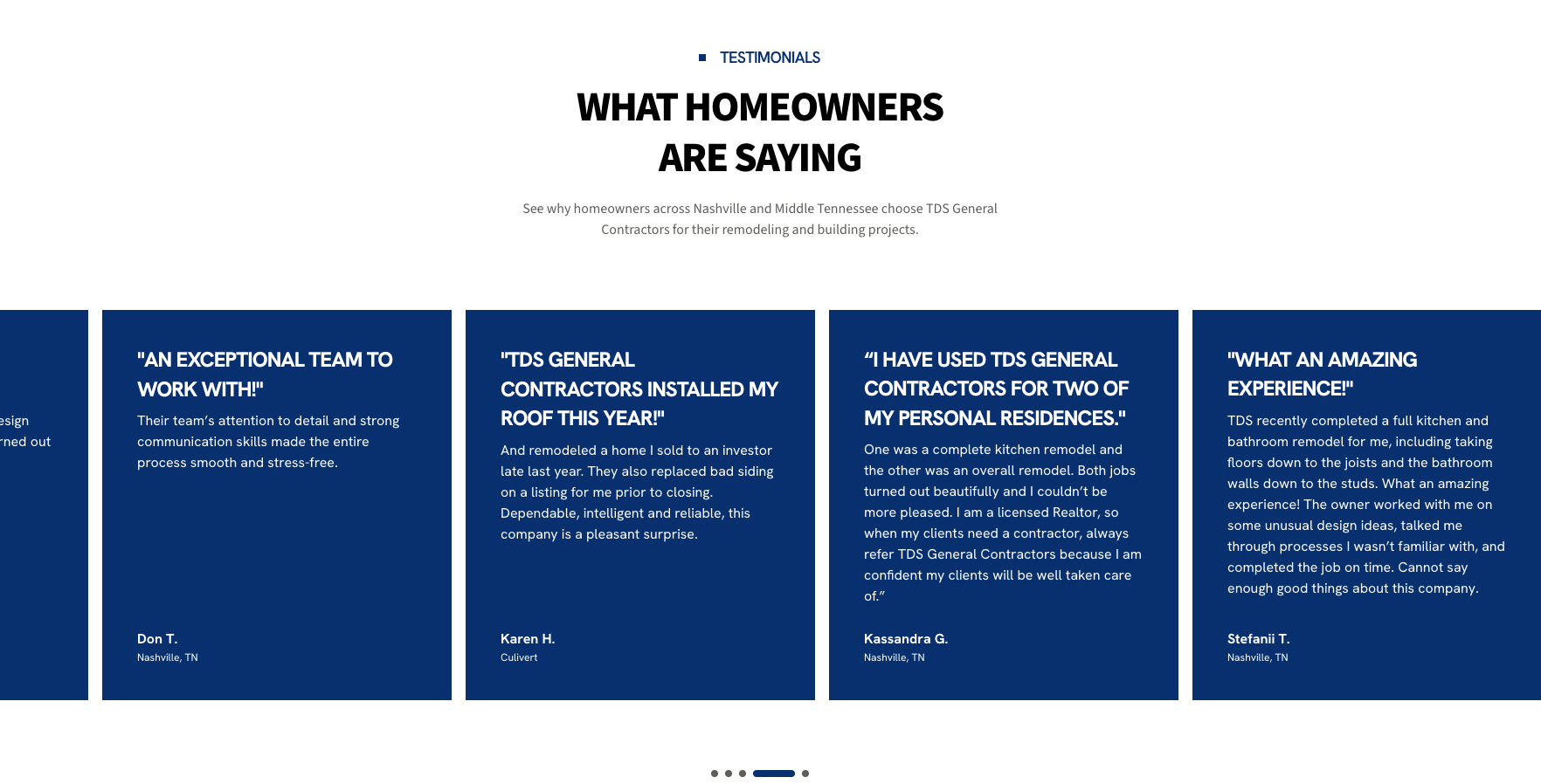
Picture how it actually happens. Your client tells their neighbor you're the best contractor they've ever used. The neighbor is sold, for about an hour. Then they do what everyone does now: they look you up to confirm what they were told. If they find a site that matches the story, the project keeps moving. If they find three blurry photos from 2021 and a contact form that doesn't work on their phone, a small doubt opens up. Maybe these folks are great but unprofessional. Maybe they've slowed down. The neighbor doesn't un-believe the referral; they just cool off, and a warm introduction goes cold for reasons your client will never know about and you'll never get to fix.

There's a number underneath this, and it's worth naming. CAC, or customer acquisition cost, is the total amount you spend to land one signed contract, whether that's ad dollars, time, or the goodwill of a client who vouched for you. A referral is your cheapest lead, which means a site that converts referrals well lowers your true cost of getting work, and a site that drops them quietly raises it. Strong brand and web presence make every other channel cheaper, because they raise the rate at which interested people actually book. That's the whole argument for taking your site seriously even when the phone is ringing: it protects the leads you've already earned. For a fuller picture of how this connects to paid traffic, our breakdown of how Google Ads turns homeowner search into booked projects walks through the other side of the same system.

Referrals Still Check A word-of-mouth lead is pre-sold but not pre-closed. Nearly all of them visit your site to confirm the story before they dial, so a weak site doesn't just cost you cold traffic. It taxes your best.

What's Costing You the Job?

The things on your site you've stopped noticing. I call these Negative Brand Signals, or The Invisible Leak, small details that don't announce themselves but steadily disqualify you with exactly the high-end homeowners you want. They're a leak because you never see the loss. There's no error message when a homeowner closes the tab. The job just goes to someone else, and you assume the market was slow.

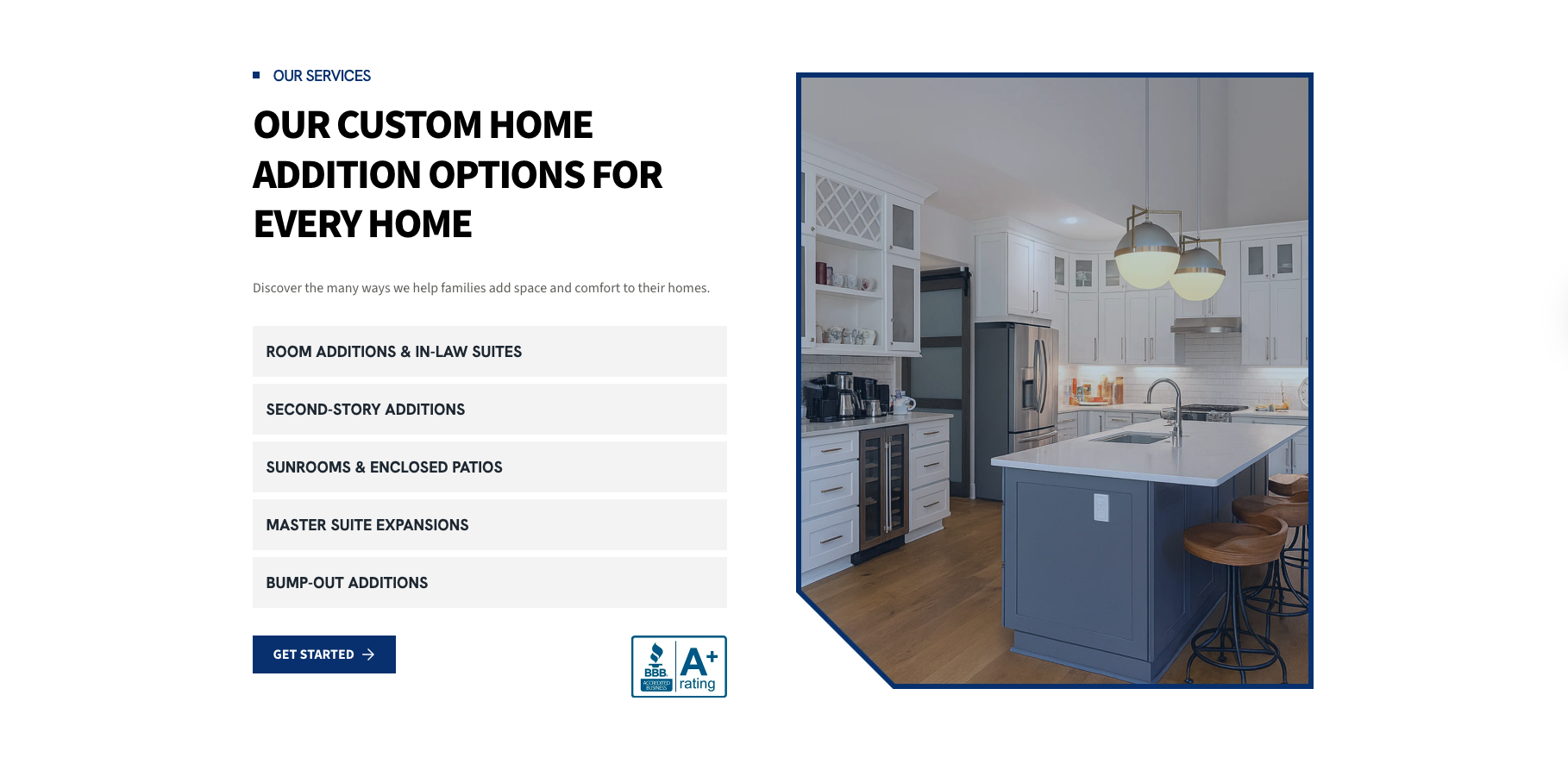
Here's what's usually leaking. Stock photos of kitchens you didn't build. A portfolio that trails off two or three years ago, which reads as are they even still busy? A phone number that isn't tappable on mobile. And the quiet killer: a slow site. According to Think with Google, the probability that a mobile visitor bounces rises 32% as load time goes from one to three seconds, and 53% of mobile visits are abandoned when a page takes longer than three seconds.¹ More than half your homeowners can leave before your beautiful work ever finishes loading.

The fix isn't a redesign for its own sake; it's an honest audit. Open your own site on your phone, on cell data, the way a homeowner actually does. Time how long it takes to load. Look at whether the first photo is real or rented. Check whether the most recent project has a date and whether that date is recent. Tap the contact button and see if it works on the first try. Every one of those is a place where a homeowner who was ready to trust you gets a tiny reason not to. The work of good remodeler website design is closing those leaks one by one, and it pairs with the rest of your brand and identity system, because the site is where that brand is either confirmed or contradicted.

The Invisible Leak The most expensive flaws on a remodeling site are the ones that never generate a complaint. Stock photos, a stale portfolio, and a three-second load don't lose you arguments. They lose you calls you never knew were coming.

What Does a Conversion-First Remodeling Website Actually Do?

It confirms three things fast, and it proves them with real work instead of adjectives. A homeowner landing on your site is asking: Am I in the right place? Can I trust these people? Do I know what to do next? A conversion-first site answers all three before the visitor has to hunt for anything. A pretty site that makes them dig, for proof, for relevance, for a way to reach you, answers none of them, and pretty is not the same as converting. This is the single most important shift in how to think about your website: stop asking whether it looks good and start asking whether it moves a nervous homeowner one step closer to picking up the phone.

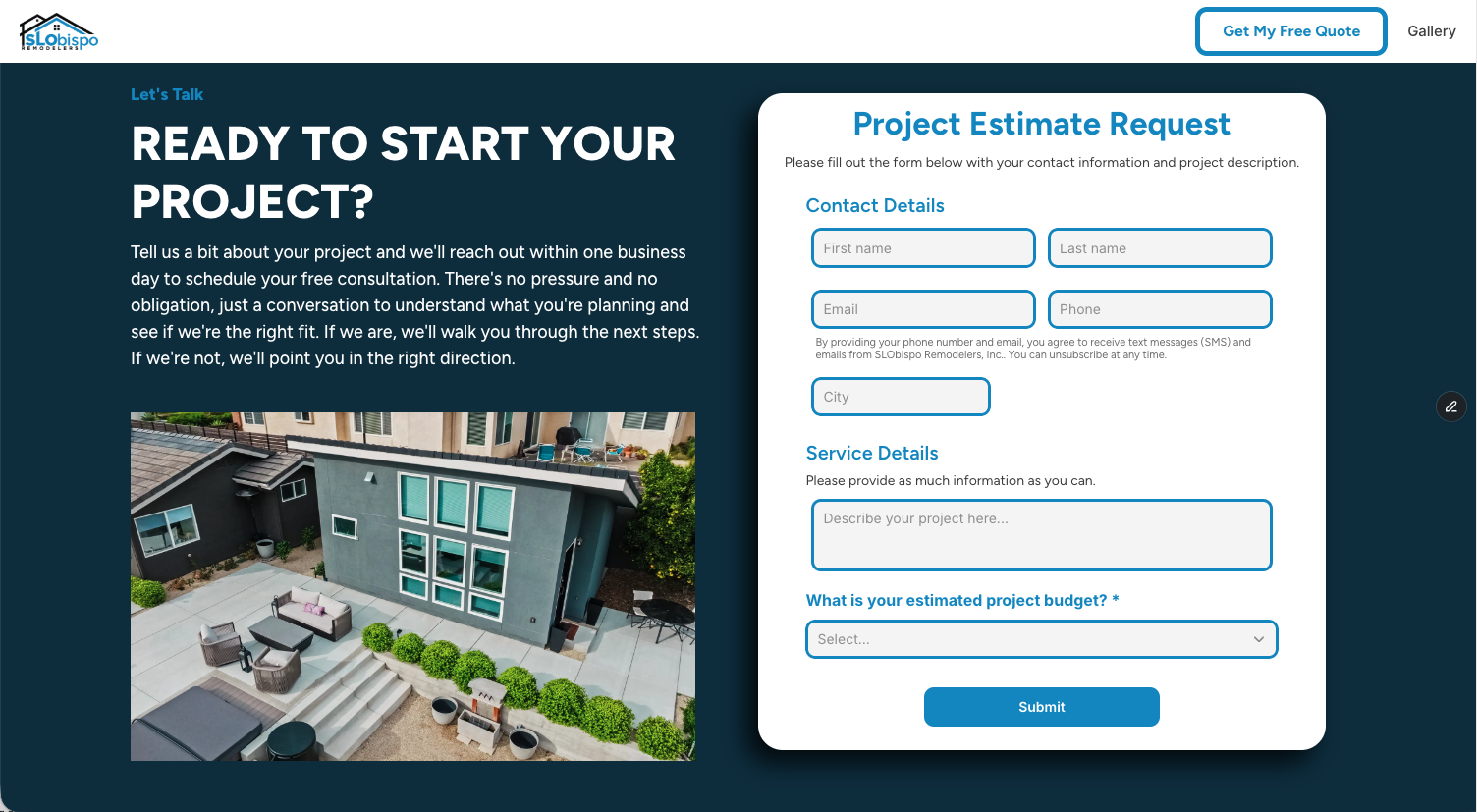
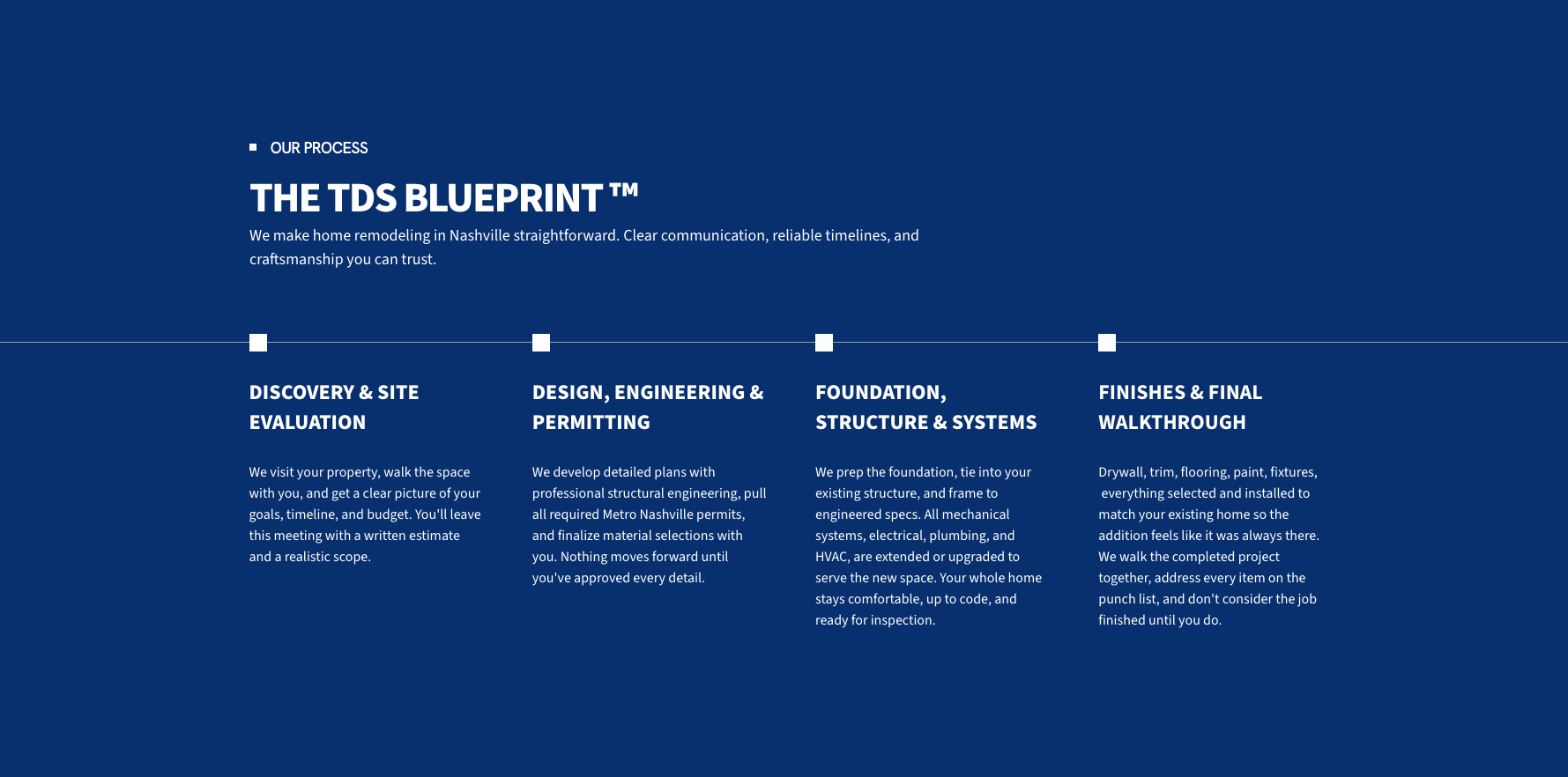
The proof is where most remodelers leave money on the table, and it's where you have an unfair advantage if you'll use it. I call it Proof of Process, documenting the messy middle of the job, not just the finished hero shot. Anyone can post a glossy "after" photo. What earns trust is the stuff that shows you're a real operation that protects a home: the zip walls sealing off the rest of the house, the HEPA filters running, the floors papered and taped before a single cabinet comes out. To most people that's just a job site. To a homeowner deciding whether to hand you their house for three months, that's the whole pitch, proof you'll treat their home with care, made visible. A real 3pm-on-a-Tuesday job-site photo can do more for conversion than a staged magazine shot, because it's the thing your competitors won't show.

Pretty vs. Converting A beautiful site that hides the proof and buries the next step is decoration. A conversion-first site answers "can I trust you" and "what do I do next" in seconds, and shows the messy middle of the job, because that's the part homeowners actually need to see.

How Should Your Site Ask for the Call?

By making it easy, not by making it hard, and staying honest about what you're actually after. The aim is never raw volume. A flood of price-shoppers and $5K-job inquiries isn't a win. The aim is qualified leads, the right-fit homeowners for the specific work the builder does. Some marketers tell you to add friction at the contact step, long qualifying forms meant to screen people out before they can reach you. That backfires, because a fifteen-field interrogation turns away the serious homeowner just as easily as the tire-kicker. You can't filter your way to good projects if you've blocked the people who would have become them.

So lower the friction at the call-to-action. A simple ask like "Get your preliminary estimate" or "Request a consultation" loosens the door open so a genuinely interested homeowner takes that first step while interest is still warm. You're not opening the funnel to collect leads for the sake of it. You're opening it wide enough to make sure the right ones get through, then concentrating on them. The site's job isn't volume, and it isn't scarcity. It's catching the qualified homeowner before they cool off or click to a competitor.

The narrowing is what gets you to qualified, and it's done by the work you show. The principle we work from is rank broad, qualify narrow: feature $200K kitchens, whole-home renovations, and design-build projects, and the homeowner looking for a $5K patch job sees this isn't their remodeler and moves on, while the one planning the project you actually want sees themselves reflected and reaches out. That's how you fill the funnel with the right clientele for that specific builder rather than just filling it. From there, your intake and your consultation do the final qualifying, on your terms, once the right lead is already in the door.

Capture, Then Qualify The goal is the right homeowner. Keep the contact step low-friction so the qualified buyer doesn't slip away, and let the work you show and your follow-up narrow the field to the projects you actually want. Volume only matters as the raw material you refine into fit.


Where Does the Website Fit in the Larger System?

It's the conversion hinge, the place where everything that drives traffic either turns into booked work or leaks away. This is the idea I want you to leave with, because it reframes the whole investment. Your website isn't a separate thing from your advertising or your brand. It's one system, not two services. Search, Google Ads, your Google Business Profile, and the neighbor's referral all do the same job: they drive a homeowner to your site. The site does the converting. The consultation does the closing. Weaken the hinge and everything upstream gets more expensive, because you're paying, in dollars or in goodwill, to send people to a page that lets them slip away.

Put real numbers on it. Across the campaigns in our portfolio, remodelers pay roughly $8 to $18 per click on competitive kitchen and bath search terms, and land qualified leads in the $150 to $350 range. When that hard-won traffic hits a site converting at around 15%, you're buying clicks and burning most of them. When it hits a site converting, the exact same ad budget produces several times the booked projects. This is why we never treat a website redesign and an ad campaign as separate projects: the ads set the ceiling on your traffic, but the site sets the ceiling on your revenue. The market itself is large and steady enough to reward remodelers that get this right. Homeowner improvement spending is projected to reach $522 billion by the end of 2026.² The demand is there. The question is whether your hinge holds when a homeowner finally lands.

For growth-minded owners who've moved past relying purely on word-of-mouth and are ready to build something that runs without them holding every piece together, the website is the natural place to start, because it's the one asset every other channel depends on. If you want to see how the full picture fits together, ads, intake, tracking, and follow-up, our complete lead generation system for remodeling companies maps the whole engine the site sits inside.

One System, Not Two Your site, your ads, and your brand are not separate line items. Traffic sources set the ceiling on visitors; the website sets the ceiling on booked revenue. A leaking site makes every other channel cost more.

Where to Go From Here

The takeaway is simple, even if the work isn't: your website is the audition every homeowner runs before they trust you, and a conversion-first build is what turns that audition into a booked project. You don't need the flashiest site in your market. You need one that loads fast, shows real proof of how you work, and makes the next step easy for the right kind of homeowner.

If you want to go deeper on the pieces, the authority and brand identity that the site puts on display is the layer underneath the design, and the Google Ads system that feeds qualified traffic to it is the channel that fills it. When you're ready to see what a conversion-first build looks like for your firm specifically, that's what we are built to do, and a short conversation is the easiest way to find out where your current site is leaking.

Frequently Asked Questions

Do remodelers really need a website if most of their work comes from referrals? Yes, because referred homeowners almost always look you up before they call. Word-of-mouth creates the introduction, but your website is where the homeowner confirms it's true. A weak or dated site can quietly cool off a warm referral without you ever knowing, which means your best, cheapest leads are exactly the ones a bad site costs you most.

How much should a remodeler spend on a website? A conversion-first website for an established design-build or remodeling firm typically runs in the low-to-mid five figures, depending on how much custom photography, copy, and proof documentation it includes. The more useful question is what a non-converting site costs you. If you're sending paid or referred traffic to a page that converts at 1 to 3% instead of 8 to 12%, the lost projects dwarf the build cost within the first year.

How long before a new website starts producing leads? A well-built site can lift conversion on your existing traffic almost immediately, since it's working on visitors who are already finding you. Building new organic traffic through search takes longer, usually a few months to gain real momentum, which is why most remodelers pair a new site with Google Ads to drive qualified visitors while organic rankings build.

What actually makes a remodeling website convert? Three things, fast: it confirms the visitor is in the right place, proves they can trust you with real project photos rather than stock images, and makes the next step easy. Conversion-first sites also document the process, the job-site protection, the cleanliness, the in-progress work, because that proof of how you operate is what reassures a homeowner about to hand over their home.

Should I send my Google Ads traffic to my homepage or a dedicated landing page? Send it to a dedicated landing page that matches the ad, not your homepage. A homeowner who clicked an ad for kitchen remodeling should land on a page about kitchen remodeling, with relevant proof and one clear action, not a general homepage that makes them hunt. Dedicated pages consistently convert better because they confirm relevance in the first second.

Are stock photos on a remodeling website really a problem? Yes, and high-end homeowners spot them quickly. Stock photos read as a signal that you're hiding your actual work, which is the opposite of what a cautious buyer needs to feel. Real photos of your own projects, including in-progress shots, build more trust than any polished catalog image, because the work is provably yours.

Is a "Free Estimate" button bad for my website? No. A clear, low-friction call-to-action like "Free Estimate" or "Get your preliminary estimate" usually helps, because it keeps a qualified homeowner from getting turned away before they ever reach you. The goal isn't to pile up leads, though, and a flood of unqualified inquiries just buries the good ones. The right approach is to lower the friction at the contact step while letting the projects you feature do the filtering, so the right-fit homeowners come through and your follow-up handles the rest.

Does my website need to rank on the first page of Google to work? No. Ranking helps with organic traffic over time, but your site's conversion rate matters regardless of how a visitor arrives. Referrals, Google Ads, your Google Business Profile, and social all send traffic to the same site, and a conversion-first build makes all of those channels more productive whether or not you're ranking organically yet.

What's the real difference between a pretty website and a conversion-first one? A pretty website is designed to look good; a conversion-first website is designed to move a nervous homeowner toward booking a consultation. The two aren't opposites, but when they conflict, a beautiful full-screen image that slows the page, or an elegant layout that hides the contact step, conversion-first design wins, because the job of the site is to get you the call, not the compliment.

Sources

  1. Google / Think with Google. New Industry Benchmarks for Mobile Page Speed (Google/SOASTA Research, 2017). thinkwithgoogle.com, https://www.thinkwithgoogle.com/marketing-strategies/app-and-mobile/mobile-page-speed-new-industry-benchmarks/
  2. Joint Center for Housing Studies of Harvard University. Leading Indicator of Remodeling Activity (LIRA), January 2026 release. jchs.harvard.edu, https://www.jchs.harvard.edu/research-areas/remodeling/lira
start now

Let’s create your next win.

Let’s talk about results like these for your team.
get started
get started

services

001

Lead Gen Systems

Performance-driven campaigns that attract high-intent leads and keep your pipeline full.

002

website & Creative

Clean, conversion-focused design that builds trust and turns interest into action.

003

Brand Identity & Messaging

Strategic branding that builds credibility, aligns your voice, and supports every channel.

004

Search & Content Strategy

SEO and content built to boost visibility, drive organic traffic, and support long-term growth.

005

Growth Strategy & Consulting

Actionable, insight-led marketing plans that prioritize clarity, ROI, and momentum.

Written By Kayla Garcia

Kayla Garcia is a brand strategist and designer who helps service businesses look as good as they perform. She got her start building brands and websites for small businesses, then went on to develop visual identities and digital experiences for builders, remodelers, and home service companies ready to compete at a higher level. Over time, Kayla became known for turning scattered ideas into cohesive brands. The kind that makes clients feel confident from the first click to the signed contract.

Related articles

start today

Done Reading? Let’s Start Building.

Turn tactics into traction with a strategy built to perform, no guesswork, no fluff, just results.