the solution
Your Brand Is Either Filtering Out Bad Leads. Or Inviting Them In.
A high-authority brand is the most profitable investment a remodeling business can make. Here's the system behind it.
.jpg)
Last Updated:
March 25, 2026
10 minute read

A high-authority brand is the most profitable investment a remodeling business can make. Here's the system behind it.
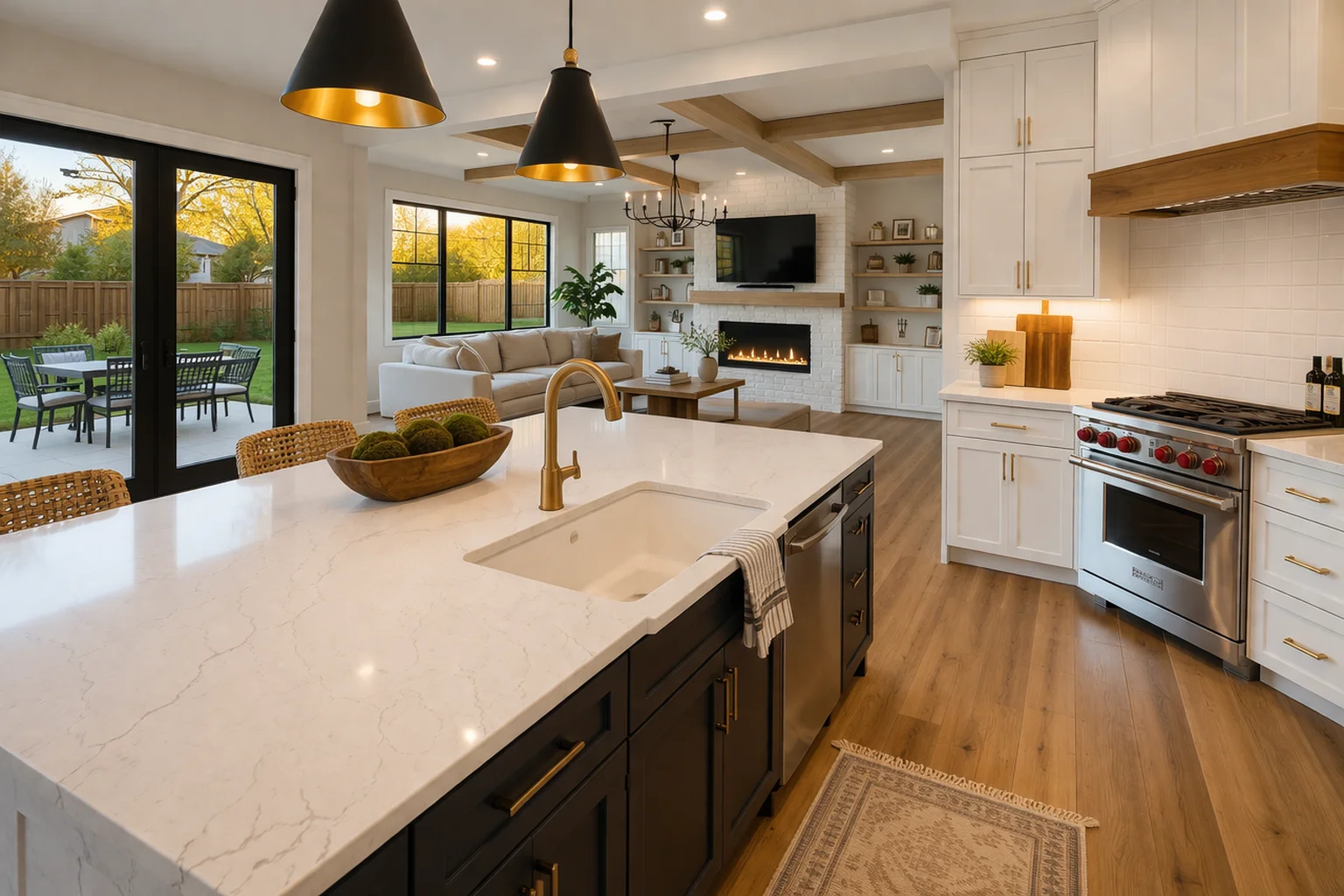
Let me be honest with you: if you think of your brand as a logo on a work truck and a matching polo, you are competing on the wrong level — and you already know it.
The remodeling market in 2026 is saturated. Every mid-level contractor has access to professional photography, AI-enhanced portfolios, and slick websites built from templates. If your brand starts and ends at the "Hero Shot" of a finished kitchen, you look like everyone else. And when you look like everyone else, homeowners make the only comparison they have left: price.
That is a race to the bottom that nobody wins.
True branding — the kind that protects your margins and fills your pipeline with serious buyers — is not a visual exercise. It is a trust-building system. At B&G, we define your brand as the sum of every feeling a prospective client has about your company before, during, and after they contact you. It's your website's load speed. It's how your team answers the phone. It's the language on your intake form. It's whether your last Instagram post was three weeks ago or three years ago. Every single one of those signals is either building trust or quietly eroding it.
Here's what high-net-worth homeowners are actually buying when they hire a premium remodeler: they are not buying a kitchen renovation. They are buying the confidence that this project will not become the nightmare they've heard about from friends. They are buying certainty in an inherently uncertain process.
Think about the last time you hired someone for a significant personal investment — a financial advisor, a surgeon, a contractor for your own home. What made you choose them? It probably wasn't the cheapest price. It was the feeling that they knew what they were doing, that they'd done it before, that they were organized, and that they would take care of you.
That feeling is your brand. And it is built — or destroyed — at every touchpoint in your prospect's journey.
None of these are expensive to get right. But all of them are catastrophically expensive to get wrong.
Most remodeling business owners look at brand investment as a cost — something you do when you finally have extra money. I want to reframe that completely.
Brand investment is a Margin Protector. Here is the simple math:
When your brand signals "generic contractor," you are a Stranger to every prospect who lands on your website. To convert a Stranger into a signed contract, you have to outbid competitors on Google Ads, spend more time on sales calls convincing them of your worth, and often discount your services just to stay in the running. That is expensive and exhausting.
When your brand signals "trusted expert," you become a Known Quantity before the phone rings. The prospect has already seen your process documentation, your real job-site photography, your client stories, your organized intake system. They arrive at the consultation already sold on your credibility. You spend less on ads to get that call, less time on the sales call itself, and you don't need to discount.

Here's a hard truth: homeowners in 2026 don't trust contractors by default. They've all heard the stories. The project that ran six months over schedule. The subcontractor who disappeared. The kitchen that looked beautiful in photos but fell apart in eighteen months.
The most beautiful finished portfolio in the world cannot overcome a prospect's fundamental anxiety: "But how do I know it will go smoothly?"
The answer is not to say "trust us, we're great." That is what every contractor says. The answer is to show your system — and to name it.
There is a significant psychological difference between a contractor who says "we have great craftsmanship" and one who says "every project follows our Precision Path, a five-phase process that ensures consistent quality control from design approval through your final walkthrough."
The first is an empty promise. The second is a product.
When you name your system, you accomplish three things at once. You signal organizational maturity — you don't wing it, you have a machine that produces results. You create differentiation — "The Precision Path" is yours; no competitor can claim it. And you give the homeowner a mental model for what working with you will actually feel like, which is exactly what they're looking for.
One of the highest-trust content moves a remodeling brand can make is showing the job site — not just the finished product. The zip walls, the HEPA filtration, the organized tool trailer, the daily cleanup protocol.
To the untrained eye, it's a construction site. To a homeowner who's about to hand you their home for three months, it's a promise. It says: "We respect your space even when it's torn apart." That single category of content builds more trust than any before-and-after ever will.
Before we add anything new to your brand, we do something most agencies skip: we look for what's already costing you deals.
High-net-worth homeowners are not passive evaluators. They are actively looking for reasons to eliminate you from consideration — it's a rational self-defense mechanism when the stakes are a $200,000 project in their home. We call the things that trigger that elimination the "Invisible Leaks."
The Stock Photo Trap. If your website features a family laughing in a kitchen that was clearly shot in a studio in another state, you've broken trust before the first word is read. Premium homeowners recognize stock photography instantly, and they read it as: "This company doesn't have enough real work to show." Your own imperfect job-site photos will outperform the most polished stock image every time.
The Ghost Town Social Feed. If your last post was from 2023, a prospect's subconscious reads that as: out of business, disorganized, or doesn't care about details. Any of those three is a deal-killer. You don't need to post every day — but you do need to signal that the lights are on and the work is happening.
Dated Design & Slow Load Speed. A website that loads slowly or looks like it was built in 2015 tells a meticulous homeowner everything they need to know about how you'll handle their project. In their mind, attention to detail is not situational — it's either a habit or it isn't. A slow site says it isn't.
For a complete breakdown, read our full guide: The $120,000 Leak: Why Your Construction Marketing Is Failing.
This one surprises almost everyone the first time they hear it. In standard marketing, the goal is to remove every possible obstacle between a prospect and contacting you. For a high-end remodeling firm, that logic is exactly backwards.
When your call-to-action is simply "Get a Free Estimate," you are sending an open invitation to every person in your market — including tire-kickers who will never sign a contract, homeowners with $40,000 budgets inquiring about $200,000 projects, and competitors checking your pricing. Your estimators spend their most valuable time on prospects who were never going to hire you.
Premium brands use what we call intentional friction to solve this problem.
The Discovery Questionnaire
Instead of a "Free Estimate" button, the intake process starts with a thoughtful questionnaire. It asks about project scope, timeline, decision-making process, and approximate investment range. It might take a prospect ten minutes to complete.
Here's what that friction actually does. It disqualifies people who aren't serious — a casual price-shopper won't bother. It pre-qualifies the people who do submit — anyone willing to spend ten minutes answering thoughtful questions is a serious buyer. And crucially, it signals to the premium homeowner that you are selective and organized. They don't want to hire a contractor who will take any job. They want to hire a specialist who is careful about who they work with.
"Easy" feels cheap. A homeowner ready to invest a quarter of a million dollars in their home wants to see that you are thorough, not desperate.
To go deeper on this, read: The Premium Paradox: Why Your Remodeling Brand is Attracting the Wrong Tax Bracket.
Here is where all of it comes together. The goal of everything we've covered — the trust architecture, the proof of process, the negative signal audit, the intentional friction — is not to make you look better. It is to make your business work harder for you, so you don't have to work harder yourself.
When your brand is functioning correctly, something powerful shifts: you stop being at the mercy of whoever happens to find you, and you start controlling the narrative that attracts the right people to you. Your marketing dollars go further. Your estimators talk to better prospects. Your close rate goes up. Your project margins hold because you're no longer discounting to win work.
The ads bring the click — see our Google Ads guide for remodelers for the campaign side of the system.
That is the business you are trying to build. Not one that does great work and hopes people notice — but one with a brand system that makes the right clients feel, before they ever meet you, that you are the only logical choice.
At B&G, we bridge the gap between creative direction and marketing systems. We build brands that look like the $10M firm you are becoming — and we build the filters that make sure your team only talks to your best prospects.
If you're a remodeling business owner who is serious about protecting your margins and building a pipeline of high-quality leads, let's have a conversation.
→ Schedule a conversation with our team at bgcollective.com/contact
Why am I getting leads who can't afford me?
This is almost always a lack of visual authority and vague messaging. When your brand looks "approachable" rather than "expert," you are signaling to the market that you are a generalist who will work with anyone. High-authority branding acts as a natural filter — it only resonates with homeowners who are ready to invest at the level you're operating at.
What is a Lead-Filtering Brand System?
It is a strategic combination of visual authority, documented process, and intentional friction — designed to disqualify low-budget shoppers before they ever enter your sales funnel. The goal is lead quality over lead volume. Ten serious inquiries are worth more than a hundred tire-kickers.
Does building a personal brand mean I have to become an influencer?
No. It means you need to be visible. People buy from people they feel they know. A short, honest video of you walking through a job site builds more trust than any produced brand video. Start there. The point is presence and authenticity — not performance.
How long does it take to see results from brand investment?
Most of our clients see measurable shifts in lead quality within 60 to 90 days of implementing the core brand system changes. The compounding effect — where your content, reviews, and brand authority build on each other — becomes most powerful at the 6-12 month mark.
Turn tactics into traction with a strategy built to perform, no guesswork, no fluff, just results.